
INTRO
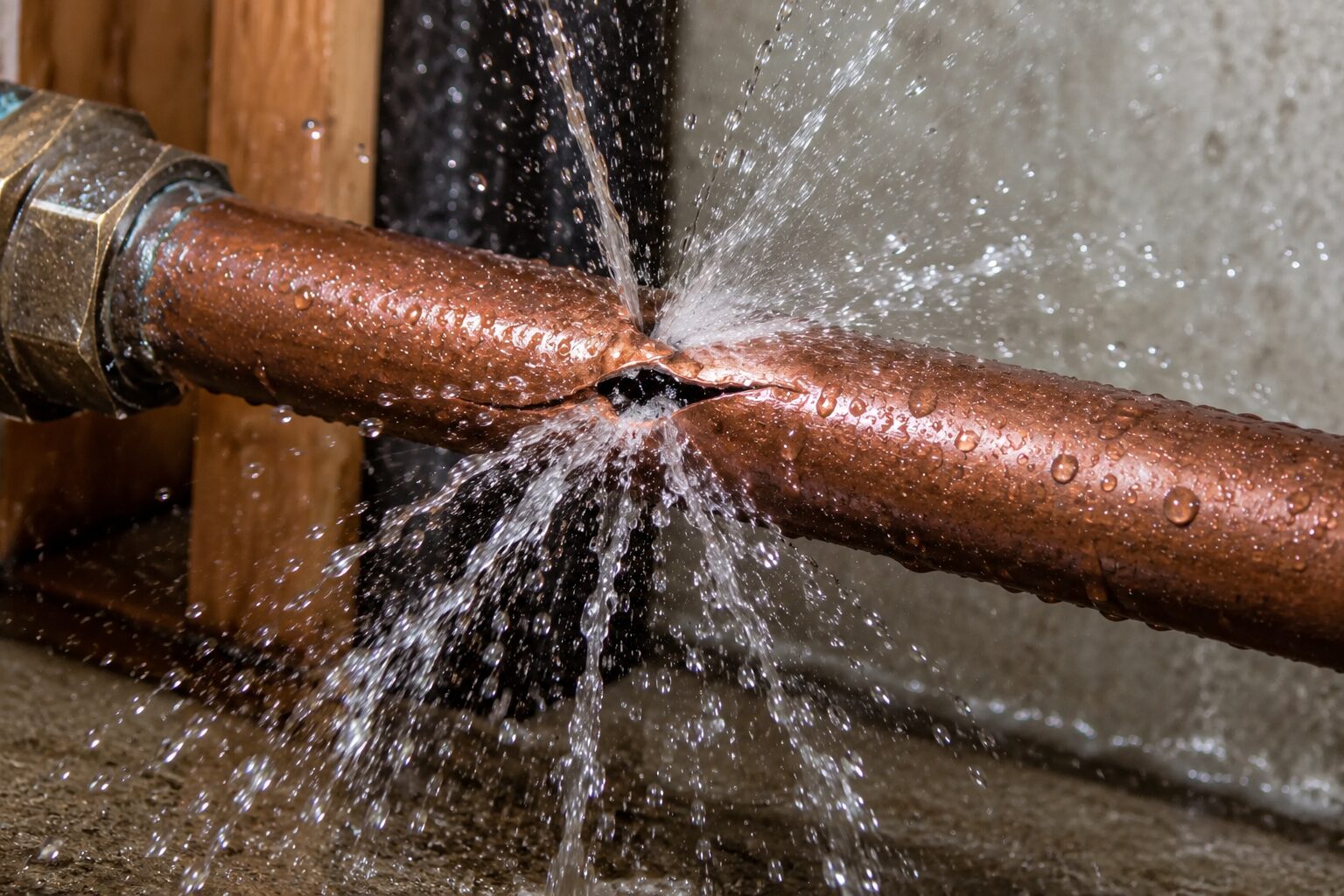
BURST PIPE DAMAGE IN Toronto
Burst pipes can cause extensive damage throughout Toronto properties, releasing water into areas that may be difficult to access and allowing moisture to spread quickly. Homes, condominiums, and commercial buildings can all be affected, with water reaching flooring, drywall, ceilings, insulation, and personal belongings. Plan B Restoration provides professional burst pipe damage restoration in Toronto, helping property owners remove standing water, identify affected areas, dry the property, and begin the necessary cleanup and restoration work.
CAUSES
COMMON CAUSES OF BURST PIPE DAMAGE IN Toronto
🧓 Aging or Corroded Plumbing
Older pipes can weaken over time and become more likely to leak or fail.
Corrosion, mineral buildup, and general deterioration can gradually reduce the strength of plumbing systems. Aging pipes may eventually develop cracks or weak points that allow water to escape and cause damage to nearby walls, floors, ceilings, and other materials.
💧 High Water Pressure
Excessive pressure can place unnecessary strain on pipes and plumbing connections.
When water pressure becomes too high, it can stress pipes, joints, valves, and fittings throughout a property. Over time, this added pressure can contribute to leaks or sudden pipe failures, particularly in older plumbing systems.
🔧 Damaged Pipe Fittings
A worn or damaged connection can eventually fail and release water into the property.
Loose fittings, cracked joints, and deteriorated seals can allow water to escape from plumbing connections. Even a small weakness can develop into a larger leak if the problem isn’t identified and repaired.
🌳 Tree Root Intrusion
Growing roots can damage underground plumbing and create openings where water can escape.
Tree roots naturally seek out sources of moisture and can enter small cracks or weak points in underground pipes. As the roots continue to grow, they can place pressure on the plumbing and contribute to cracks, blockages, or pipe failure.
📐 Poor Installation
Improperly installed plumbing can be more vulnerable to stress, leaks, and premature failure.
Pipes that aren’t properly supported, connected, or protected may experience unnecessary strain during normal use. Over time, poor installation can contribute to damaged fittings, cracked pipes, and other plumbing problems.
TYPES OF SERVICE
WAYS WE HANDLE BURST PIPE DAMAGE IN Toronto
Burst pipe damage can vary depending on where the pipe fails, how much water is released, and how quickly the leak is addressed. At Plan B Restoration, we provide professional burst pipe damage restoration services for homes, condos, and commercial properties throughout Toronto, helping remove water, dry affected areas, and address materials damaged by the leak.
- Emergency water extraction — Removing large amounts of water released by the burst pipe to help limit the spread of damage.
- Source assessment — Inspecting the affected plumbing area to help determine where the pipe failed and which parts of the property have been impacted.
- Moisture detection — Checking walls, flooring, ceilings, insulation, and other areas for moisture that may not be visible.
- Structural drying — Using professional drying equipment to remove moisture from building materials affected by the pipe break.
- Dehumidification and air circulation — Reducing humidity and improving airflow to help accelerate the drying process.
- Damaged material removal — Removing drywall, insulation, flooring, or other materials that have been too heavily affected to dry or restore.
- Cleaning and sanitization — Cleaning affected surfaces and belongings to address dirt, debris, and contaminants introduced by the water.
- Contents protection — Moving furniture, electronics, personal belongings, and other items away from the affected area when possible.
- Restoration and repairs — Repairing or coordinating repairs to damaged areas and helping return the property to its previous condition.
OUR BURST PIPE DAMAGE REPAIR PROCESS
We begin by identifying the affected pipe and assessing how much water has entered the property. Our team checks floors, walls, ceilings, insulation, and other areas for both visible and hidden damage.
Once the source has been identified, the water supply should be shut off to prevent additional flooding. We take steps to protect unaffected areas and contain the spread of water wherever possible.
Any accumulated water is extracted using professional water removal equipment. Prompt extraction helps minimize damage to flooring, drywall, furniture, and other materials.
Water from a burst pipe can travel behind walls, underneath flooring, and into insulation before the damage becomes visible. We assess affected materials and use professional drying equipment to target trapped moisture.
Air movers and dehumidifiers are used to thoroughly dry the affected areas. Once dry, damaged areas and salvageable belongings can be cleaned and treated as appropriate to help prevent lingering problems.
After the property has been stabilized, we move on to restoration. Depending on the severity of the burst pipe, this can include repairing or replacing damaged drywall, flooring, insulation, trim, ceilings, and other building materials.
LOCAL SPECIFICITY
OUR TORONTO LOCATIONS
We proudly serve Toronto communities including:
- Downtown Toronto and the Financial District (M5B, M5C, M5G areas)
- Yorkville and The Annex (M4W, M5R areas)
- Kensington Market and Chinatown (M5T areas)
- Queen West and West Queen West (M5V, M6J areas)
- Liberty Village (M6K areas)
- Parkdale and Roncesvalles (M6J, M6R areas)
- High Park and Bloor West Village (M6P areas)
- The Beaches and Woodbine Heights (M4E, M4L areas)
- Leslieville and Riverside (M4M, M4L areas)
- Yonge–Eglinton and Davisville (M4P, M4S areas)
FAQ
FREQUENTLY ASKED BURST PIPE DAMAGE QUESTIONS
If it is safe to do so, shut off the main water supply to stop additional water from entering the property. Turn off electricity to affected areas if you can do so safely, move belongings away from the water, and contact a professional restoration company as soon as possible.
Burst pipe damage should be addressed as quickly as possible because a broken pipe can release a significant amount of water in a short time. Prompt water extraction and drying can help limit damage to flooring, drywall, insulation, furniture, and other materials.
Yes. Frozen pipes can crack or burst when temperatures drop, potentially releasing water after the pipe thaws. Plan B Restoration can help with water extraction, moisture assessment, structural drying, and restoration following a frozen or burst pipe.
Low water pressure, unusual noises from pipes, discoloured water, damp spots, water stains, and visible corrosion can indicate a plumbing problem that should be inspected before the pipe fails.
Stopping or repairing the plumbing leak is only the first step. The affected property should be inspected for moisture, standing water should be removed, and wet materials should be thoroughly dried before restoration and repairs begin.